
Learn About Endometrial Cancer
Endometrial Cancer
Endometrial cancer is one of the most common cancers among women. Excluding mucosal cancers, nearly 90% of lesions develop from the endometrium, and therefore it is also known as endometrial cancer.
In Hong Kong, the incidence of endometrial cancer has shown an upward trend in recent years. According to cancer statistics, over 1,100 new cases were recorded in 2018, with approximately 115 related deaths. Most patients are postmenopausal women, particularly those over the age of 60. High-risk factors include obesity, never having given birth, prolonged estrogen replacement therapy, and a family history of breast cancer, ovarian cancer, or colorectal cancer.
Early symptoms of endometrial cancer are often subtle and may be mistaken for menstrual irregularities. Typical warning signs include postmenopausal vaginal bleeding or abnormal discharge. In more advanced stages, symptoms may include pelvic pain, a palpable lower abdominal mass, or changes in bowel habits. As endometrial cancer tends to grow slowly, early detection can lead to a cure rate of over 90%. The primary treatment is surgery, which may be complemented by radiation therapy, chemotherapy, or hormone therapy.

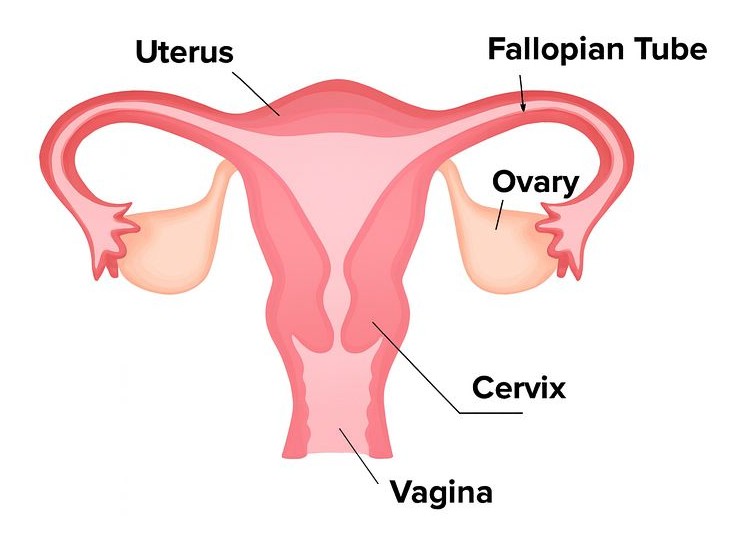
What is the Uterine Body
The uterine body is the main part of the uterus, located between the uterine fundus and the cervix. It is composed of the endometrium and muscular layers, and serves as the site where the embryo implants and develops during pregnancy.
Causes and Symptoms
What Causes Endometrial Cancer?
Although the exact cause of endometrial cancer is not yet fully understood by the medical community, several known factors can increase the risk of developing the disease:
Age:Women over 60, especially those who are postmenopausal.
Reproductive History:Women who have never given birth.
Obesity:Higher risk among obese women, particularly those with central obesity after menopause.
Hormone Therapy:Women who receive estrogen-only hormone replacement therapy (HRT) or take hormonal supplements after menopause.
Family History:Personal or immediate family history of breast cancer, ovarian cancer, or colorectal cancer.
Women diagnosed with Polycystic Ovary Syndrome (PCOS).
Women with Endometrial Hyperplasia (abnormal thickening of the endometrium).
Metabolic Disorders:Women with diabetes or metabolic syndrome (high blood pressure, high blood sugar, and high cholesterol).
Common Symptoms of Endometrial Cancer
Early Stage
Endometrial cancer often presents no obvious symptoms in its early stages and may be mistaken for menstrual irregularities. Common signs include:
Abnormal vaginal bleeding (e.g., bleeding between menstrual cycles or after menopause)
Unusual vaginal discharge after menopause
Mid to Late Stage
As the disease progresses, symptoms become more noticeable:
Pelvic pain during intercourse or urination
A palpable hard mass in the lower abdomen

Diagnostic Methods
Initial Examinations
Pelvic Exam:A physical examination to check for abnormalities in pelvic organs.
Endometrial Biopsy:A sample of endometrial tissue is taken to test for cancer cells.
Transvaginal Ultrasound, TVU:Uses ultrasound to assess endometrial thickness and detect abnormalities.
Hysteroscopy and Biopsy:A hysteroscope is used to visually inspect the uterus and collect tissue samples.
Dilation and Curettage, D&C:Scraping of the endometrial lining for pathological examination.
Advanced Imaging
If initial tests suggest possible endometrial cancer, doctors may arrange further imaging to assess the extent of the disease:
Computed Tomography (CT Scan):Uses X-ray cross-sectional imaging to examine tumor location and size.
Magnetic Resonance Imaging (MRI):Provides clearer soft tissue images to determine whether the cancer has spread.

Treatment Methods
When planning a treatment regimen, doctors will consider multiple factors, including:
-
The patient’s age and overall health condition
-
The type and size of the tumor
-
The microscopic characteristics of the tumor
-
Whether the cancer has spread beyond the cervix

